Tacit Subjects: Belonging and Same-Sex Desire among Dominican Immigrant Men
Carlos Ulises Decena
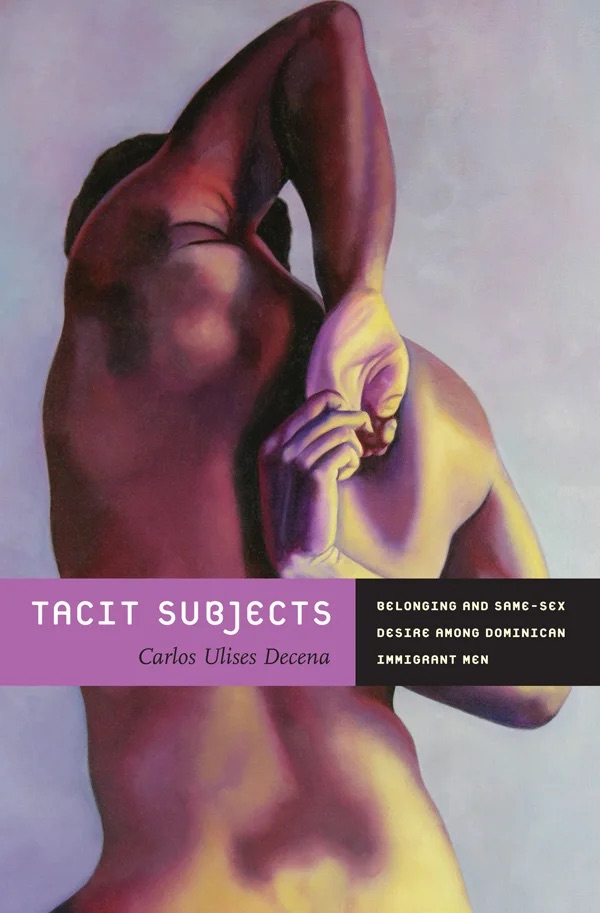 Tacit Subjects: Belonging and Same-Sex Desire among Dominican Immigrant Men is an ethnographic study of gay Dominican immigrant men of color in New York City and of how they deal with race, sexuality, and power in everyday life. Carlos Ulises Decena explains that the men who told him their life stories may describe themselves as gay, yet they are not the liberated figures familiar from traditional gay migration narratives. The men moved to Washington Heights, a Dominican enclave, and many relied on their families and wider communities to migrate and survive. Speaking openly about their sexuality could have broken those ties, and some of the men were sure that relatives or others close to them already understood it without being told. Decena examines the men’s recollections of migration, settlement, masculinity, sex, and trips back to the Dominican Republic to show how they challenge, reproduce, and rework Dominican identity in New York, and how class, race, and education affect their relations with other Dominicans. The book also presents a “gay New York” in which gaining respect, finding belonging, and surviving are the central struggles within an immigrant community.
The Author
Carlos Ulises Decena is Professor of Latino and Caribbean Studies and of Women’s, Gender, and Sexuality Studies at Rutgers University, New Brunswick.
The Chapters
Introduction
1. Tacit Subjects
Part I. Leaving Living in the Mental Island
2. Moving Portraits
3. Desencontrando la dominicanidad in New York City
Part II. Body Languages
4. Eso se nota: Scenes from Queer Childhoods
5. Code Swishing
Part III. Colonial Zones
6. Virando la dominicanidad
7. To Be Someone, To Be Somewhere: Erotic Returns and U.S.-Caribbean Circuits of Desire
Epilogue
The Reviews
Praise for Tacit Subjects from scholars and journals appears in the Praise section of the Duke University Press page for the book.